Roof rat structural exclusion in Glendale addresses the behavioral biology of Rattus rattus, an agile climber that exploits mature citrus canopies, oleander hedges, and palm skirts across Maricopa County. Properties in…
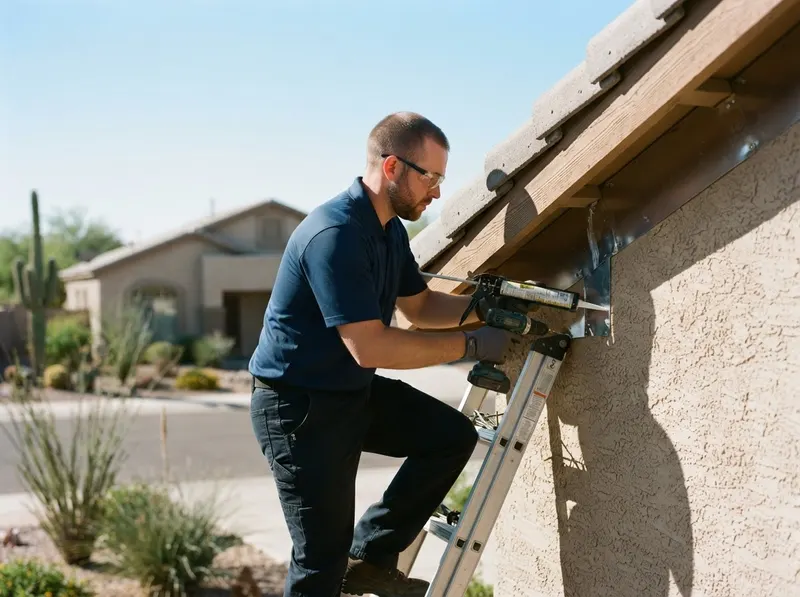
Roof rat structural exclusion in Glendale addresses the behavioral biology of Rattus rattus, an agile climber that exploits mature citrus canopies, oleander hedges, and palm skirts across Maricopa County. Properties in mature agricultural or historic pockets like Catlin Court Historic District, Sahuaro District, and Manistee Ranch face constant pressure due to dense fruit trees and irrigation ditches, while waterfront communities in Arrowhead Ranch and Bellair encounter high activity along canal retaining walls. Roof rats enter roof assemblies through gaps as narrow as 0.5 inches, targeting unscreened architectural dormers, open tile eaves, drywall junctions, and AC chase penetrations. Preventing re-entry demands physical architectural repairs rather than rodenticide baits, which leave carcasses to decompose inside wall cavities during 110-degree summer heat.
Attic decontamination directly targets the biological hazard remaining after structural entry points are sealed. In neighborhoods such as Marshall Ranch, Hidden Manor, and Ranch de Concepcion, roof rats compress attic insulation by 30% to 50% while constructing subterranean tunnels beneath the depth gauge. This activity leaves behind urine salts, leptospirosis risks, and pheromone markers that draw subsequent rodent colonies along the roofline. Technicians remove damaged insulation using negative-pressure HEPA vacuums, treat structural joists with hospital-grade antimicrobial enzymes to neutralize airborne pathogens, and clear toxic debris without cross-contaminating the living quarters below.
Decision guidance relies on the integrity of structural materials and interior air quality. If an attic exhibits only minor exploratory droppings limited to a 5-foot perimeter near an attic hatch, targeted localized trapping and a baseline $200 entry seal satisfy safety requirements. If insulation is visibly compressed, gnaw marks appear on NM-B electrical cables, or musky odors penetrate drywall ceilings, complete multi-phase mechanical exclusion paired with full-attic sanitization is required. The trade-off centers on upfront capital investment versus long-term attic remediation: physical steel exclusion requires a higher initial outlay than retail poisons, but it eliminates recurring contract billing and structurally secures the home envelope.
Every job gets a firm, written price after a free on-site visit.
Tell us about your roof rat structural exclusion & attic decontamination job in Glendale and we'll send a clear, written quote, usually the same day.
 Veltrix Insect Services